Switch Gun vs Traditional Handguns: How They Compare
Traditional handguns - pistols and fixed-frame revolvers - have decades of refinement behind them. The Switch Gun is a newer approach built specifically around one tradeoff: separating carry size from firing size. Here's how the two actually compare, category by category, without pretending either one is strictly better.
Concealment
Traditional handguns: Concealment depends entirely on the gun's fixed size. A full-size pistol conceals poorly without significant clothing adjustments; a subcompact conceals well but usually at the cost of grip and capacity.
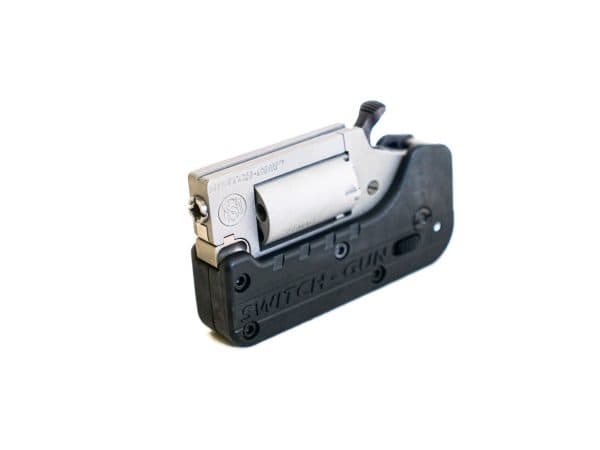
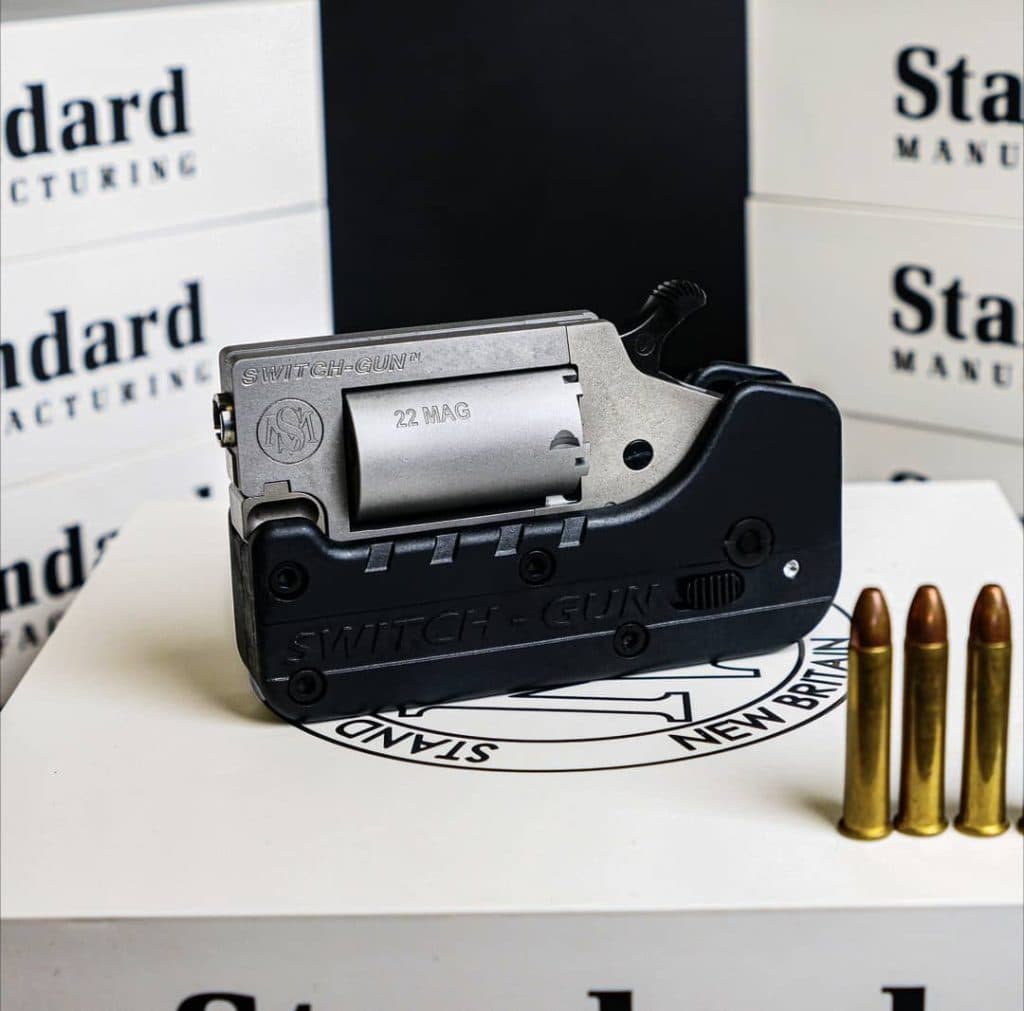
Switch Gun: Folded, it's roughly smartphone-sized regardless of its firing-position grip - a genuinely different concealment profile than a fixed-frame gun of comparable firing size.
Verdict: The Switch Gun has a real, structural advantage here. This is its core design purpose.
Grip and Control
Traditional handguns: Grip size is fixed to the gun's overall size - smaller guns generally mean smaller, harder-to-control grips, especially under recoil.
Switch Gun: Unfolds to a full-size polymer grip, giving it control closer to a standard-size revolver than its folded footprint would suggest.
Verdict: Advantage Switch Gun for control-relative-to-concealed-size, though a full-size traditional handgun with more hand contact area will still generally out-control it in absolute terms.
Capacity and Caliber Options
Traditional handguns: Semi-auto pistols typically offer higher magazine capacity (10+ rounds common) and a wide range of calibers from .22 LR through centerfire options like 9mm or .45 ACP. Revolvers typically hold 5-8 rounds depending on frame size.
Switch Gun: 5-round capacity, chambered in .22 WMR or .22 LR only - meaningfully fewer rounds and a lighter caliber than most semi-auto carry pistols.
Verdict: Clear advantage traditional handguns, particularly semi-autos, on both rounds available and caliber selection.
Deployment Speed
Traditional handguns: Draw and fire - one motion once the gun clears the holster or pocket.
Switch Gun: Draw, unfold, fire - an additional step compared to a traditional handgun, though the fold-to-fire motion is designed to be quick and single-handed with practice.
Verdict: Advantage traditional handguns on raw deployment speed, though the gap narrows with practice on the Switch Gun's specific motion.
Mechanical Simplicity and Reliability
Traditional handguns: Fixed-frame revolvers in particular are mechanically simple with very few moving parts, which is part of why they're often recommended as highly reliable defensive firearms.
Switch Gun: Adds a folding hinge mechanism on top of a standard revolver action - one additional moving part and maintenance point that a fixed-frame revolver doesn't have.
Verdict: Advantage traditional fixed-frame revolvers on sheer mechanical simplicity, though the Switch Gun's hinge is a core engineered feature, not an afterthought bolted on.
So Which Should You Choose?
If concealment is your top priority and you're comfortable with a lighter caliber and lower capacity as the tradeoff, the Switch Gun's folding design solves a real problem traditional handguns can't: full grip control in a genuinely pocket-sized package. If you prioritize capacity, caliber selection, or the fewest possible moving parts, a traditional pistol or fixed-frame revolver is likely the better fit. Many owners solve this by carrying a traditional handgun as their primary and a Switch Gun as a deep-concealment backup - using each for what it does best rather than choosing one exclusively.