Switch Gun vs LifeCard: Comparing the Two Folding Pocket Guns
The Switch Gun and the Trailblazer LifeCard are the two most recognized folding firearms on the market, and they're often mentioned in the same breath - but their designs solve the "fold for concealment" problem in genuinely different ways. Here's an honest, side-by-side comparison.
Design Approach
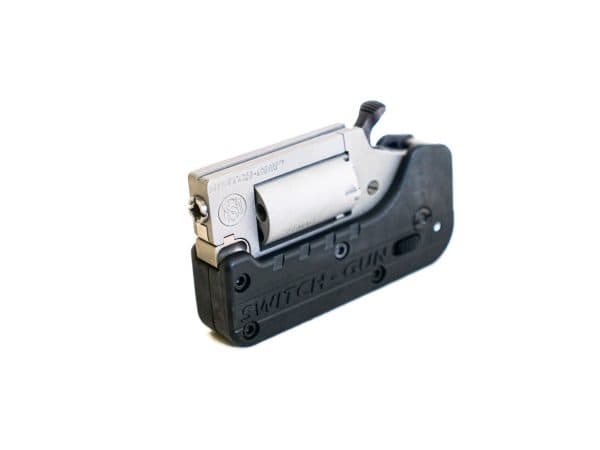
Switch Gun: A folding single-action revolver. The cylinder holds 5 rounds, and the folding mechanism is built around a full-size polymer grip that unfolds for firing.
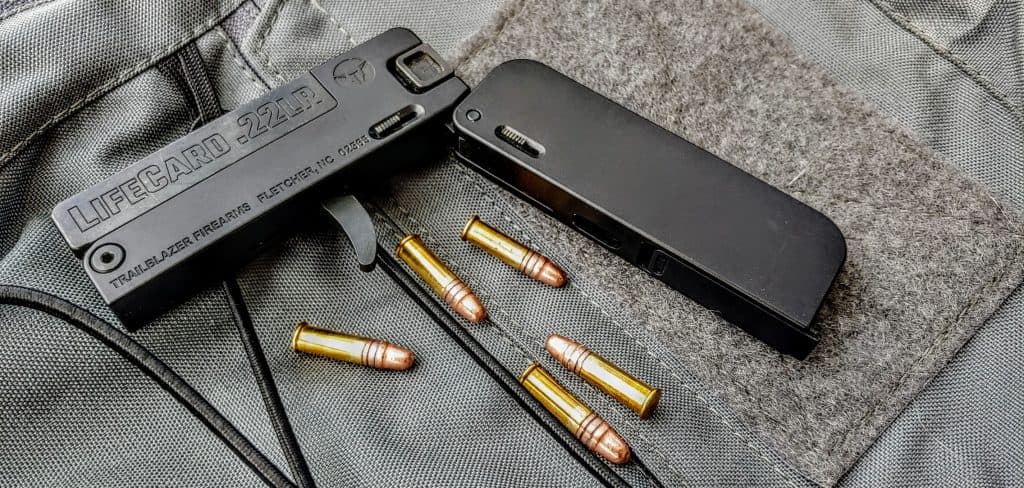
LifeCard: A folding single-shot pistol with a tilt-up barrel - you load one round at a time directly into the barrel, with a small compartment in the grip for a few spare rounds. Folded, it's built to the footprint of a stack of credit cards.
Capacity
Switch Gun: 5 rounds per cylinder, with a fast tool-free cylinder swap for reloading.
LifeCard: 1 round in the chamber at a time, with 3-4 spare rounds stored in the grip - reloading means manually loading each round individually into the tilt-up barrel.
Verdict: A meaningful advantage for the Switch Gun if follow-up shots matter to you. The LifeCard's single-shot format is a deliberate design tradeoff for its especially thin, flat profile.
Folded Size
Switch Gun: Folds to roughly 2.125" x 3.75" x .75" - about the size of a smartphone.
LifeCard: Folds to 3.375" x 2.125" x .5" - thinner than the Switch Gun, closer to a stack of credit cards, and it's built specifically around that ultra-flat form factor.
Verdict: The LifeCard is thinner; the Switch Gun is closer to smartphone dimensions. Both are genuinely pocket-sized, just different shapes of pocket-sized.
Caliber Options
Switch Gun: .22 WMR or .22 LR, via interchangeable cylinders on the same frame.
LifeCard: Also available in .22 WMR or .22 LR, though as separate models rather than a swappable-cylinder system.
Verdict: Comparable caliber options; the Switch Gun's swap system lets one frame cover both calibers, while the LifeCard requires choosing per model.
Deployment Speed
Switch Gun: Press a button, the grip springs open and locks, cock the hammer, fire - a fairly quick single-handed sequence once practiced.
LifeCard: Unfold the frame, tilt open the barrel to load (if not already loaded), close the barrel, retract the striker, fire - a somewhat more involved sequence, particularly if loading a round fresh rather than carrying it pre-loaded.
Verdict: The Switch Gun is generally faster to bring into action, especially if you need more than one shot ready without reloading mid-sequence.
State Availability
Both firearms currently share the same restriction: neither is available for sale in California, Massachusetts, or Maryland.
Which Should You Choose?
If capacity and faster follow-up shots matter most to you, the Switch Gun's 5-round cylinder and quick cylinder-swap reload are the stronger choice. If the thinnest possible folded profile is your top priority and you're comfortable with a single-shot format (essentially a true last-resort backup rather than a primary carry option), the LifeCard's credit-card form factor is a genuinely different, purpose-built answer to the same concealment problem.