Switch Gun .22 Buying Guide: What to Know Before You Buy
If you're researching the Switch Gun, you've probably already seen the spec sheet. This guide covers what that spec sheet doesn't: how it actually compares to other options, who it's realistically a good fit for, and the questions first-time buyers tend to ask before ordering one.
How the Switch Gun Came to Exist
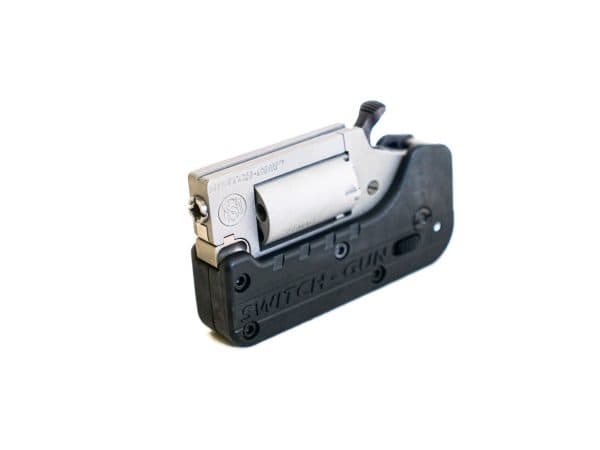
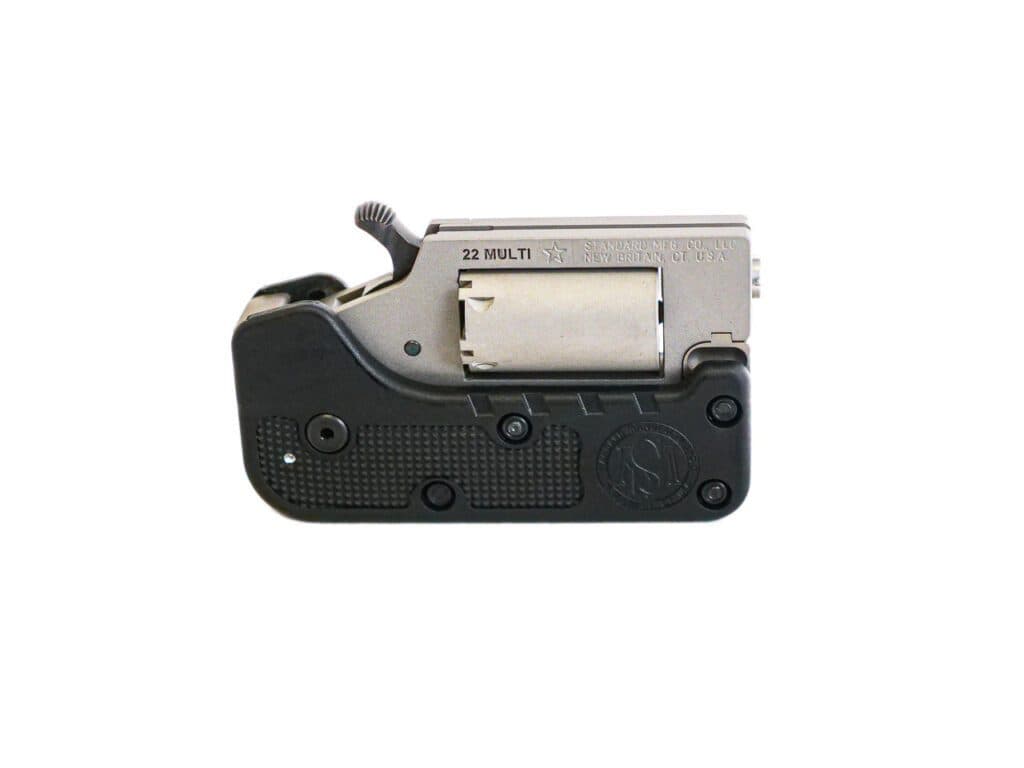
Most compact carry firearms are shrunk-down versions of larger designs - smaller pistols, snub-nosed revolvers. The Switch Gun took a different approach: Standard Manufacturing built a folding mechanism from scratch specifically to solve the tradeoff between grip size and pocket size, rather than compromising on one to get the other. It's a newer category of firearm, not an iteration on an old one - which is part of why it draws curiosity even from people who aren't actively shopping for a new carry gun.
Who the Switch Gun Is (and Isn't) a Good Fit For
Good fit for:
- Someone who currently carries nothing because larger options feel impractical day-to-day
- Backup or off-body carry for someone who already carries a primary firearm
- Situations where deep concealment matters more than magazine capacity
Worth thinking through first:
- .22 WMR has real limitations compared to centerfire self-defense calibers - it's a tradeoff for concealability, not a strictly "more powerful" option
- Five rounds is enough for many personal defense scenarios but is worth weighing against your specific situation
- Single-action operation means a deliberate cocking motion before each shot, which is a different manual of arms than a double-action revolver or semi-auto
How It Compares to Other Pocket Revolvers
A traditional pocket revolver (like a snub-nosed .38) typically has a fixed frame - the size you carry is the size you shoot with, and a grip small enough to conceal usually means a grip too small to fully control. The Switch Gun's folding design sidesteps that tradeoff: the carry size and the firing size are different, so you're not stuck choosing between concealment and control. The cost of that flexibility is a folding mechanism with moving parts, which is a maintenance consideration a fixed-frame revolver doesn't have.
Ammunition Considerations
.22 WMR self-defense ammunition has improved significantly in recent years, with modern loads designed specifically for short-barrel velocity loss. If you're using the Switch Gun for personal protection rather than target practice, it's worth researching loads tested from barrel lengths similar to the Switch Gun's rather than assuming standard .22 WMR ballistics data (often tested from rifle-length barrels) will match your real-world performance.
Common First-Time Buyer Questions
Do I need a special permit to buy one? The Switch Gun is purchased the same way as any other handgun - through a licensed FFL dealer, subject to your state's standard background check and purchase requirements. No special permit beyond what your state already requires for handgun purchases.
Can I dry-fire practice with it? Yes, and it's worth practicing the fold-to-fire motion specifically, since that one-handed deployment is the Switch Gun's main functional difference from a standard revolver.
How does the trigger feel compared to a standard revolver? Being single-action only, the trigger pull is lighter and shorter than a double-action revolver's, since you're manually cocking the hammer before each shot rather than the trigger doing both jobs.
Is it hard to reload quickly? Reload speed depends on method: a full cylinder swap is faster than reloading rounds individually, which is why many owners carry a spare loaded cylinder rather than loose ammunition.